
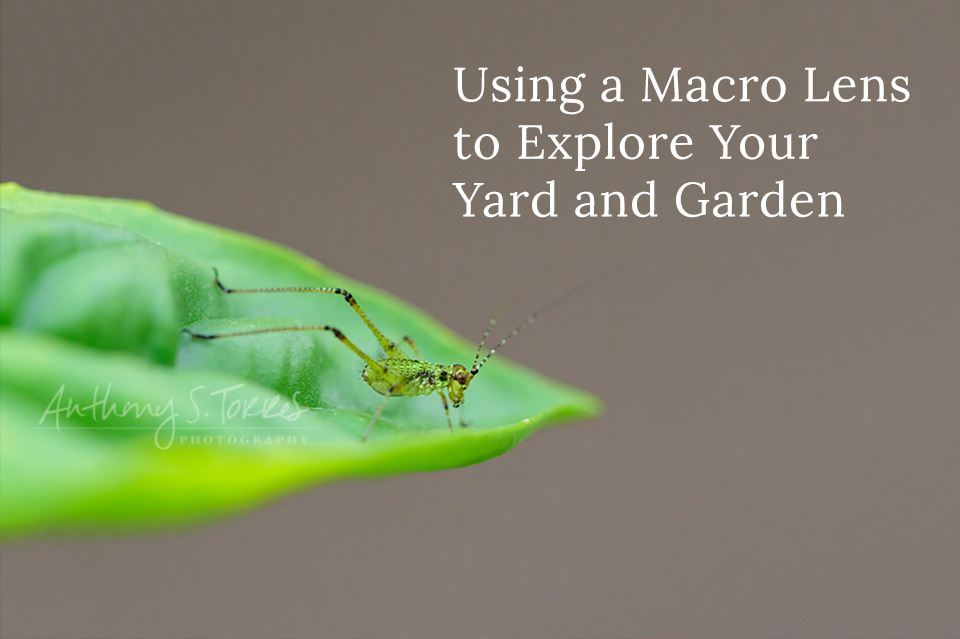
One of the big things photography teachers say, and I believe it, is that if you want to take interesting photos, you need to go to interesting places. It's to keep you from being lazy and just taking the same old photos in your home. The fundamental point is to push yourself to try new angles and new perspectives. However, you can still put real effort into exploring the area close to your home and find genuinely interesting photos.
My Sigma 150mm Macro Lens
I love my macro lens because it allows me to take that sense of exploration, but at home when I just don't have the time to travel. It gives me the freedom to have my daughter around watching me, excitedly seeing the results, almost cheering me on, all within range of getting back inside quickly. (Hey, real problem as a parent when you're on the road.)
I use the Sigma 150mm Macro Lens for Nikon, now on my Z-mount body via the FTZ adapter. I went for the longer length in case I needed to put some distance between myself and a skittish subject, and it still delivers. It also doubles as a solid long portrait lens.
Be Aware of Your Background
Just like with any photography, you need to not only find your subject, but once you find it, you need to be aware of your background. If you're photographing a flower, you can have it against a background of similar flowers for a color comparison effect, or you can isolate the subject by moving to put a solid color behind it. Both are valid choices. The key is that you make this an active decision and look around before you press the shutter.
This is where you can explore all the angles from above, below, and all around, to see how you can frame your subject against a better background. Move those feet.
Depth of Field Can and Will Surprise You
Narrow depth of field is great for portraits and isolating subjects. With a portrait of a person, you think, "oh nice, f/5.6, I should get the whole face in focus." With a bug, you may only get one eye in focus at that aperture setting due to the magnification of the macro lens. You'll be shooting at larger f-stops to get more in focus, which means less light getting in, so be prepared.
Can you shoot at a lower aperture? Yes, but just be aware of what magnification does to depth of field at close range. Also, while you may love your autofocus, you are genuinely better off focusing manually for macro work. The narrow depth of field pretty much requires it.
At Least the Props Can Be Smaller
When you shield or reflect light for people and larger subjects, the props you use can be quite large. Luckily, at macro scale you can use a piece of paper or other small objects just as effectively, and it's much easier to work with. For a bug photo I shot, I was able to just use my left hand to block the sun while my right was steady on a ledge. Experiment with other objects, especially as backgrounds. Even the smallest things can lead to more interesting bokeh behind your subject.
Have Patience, but Have Fun
Nature won't listen to you. The wind won't stop blowing and shaking leaves. Bugs and animals really couldn't care less about you, and will probably avoid you. Sometimes by just laying there and being patient, you can get the shot you want. I once waited about ten minutes for a turtle that had retreated when I first approached. After a while he started moving again, showing his head, and eventually I got more of the shot I wanted. Then he basically ignored me and moved around. I'd move, he'd hide; rinse and repeat.
Ten minutes is honestly not a long time in this kind of photography, so be prepared to wait longer. Of course, sometimes a moment passes so quickly you need to react instantly. Be ready, practice focusing quickly at close range, and most importantly, have fun. You're hanging out in nature. What's nicer than that?
The Lens I Use
If this has helped you consider a macro lens, Adorama is a trusted photography dealer where you can browse current macro options. Want to try before you buy? LensRentals is my go-to for renting gear.